
Shopify PDP Product Media Example
A product-first media direction for teams building a connected Shopify PDP story instead of isolated product assets.
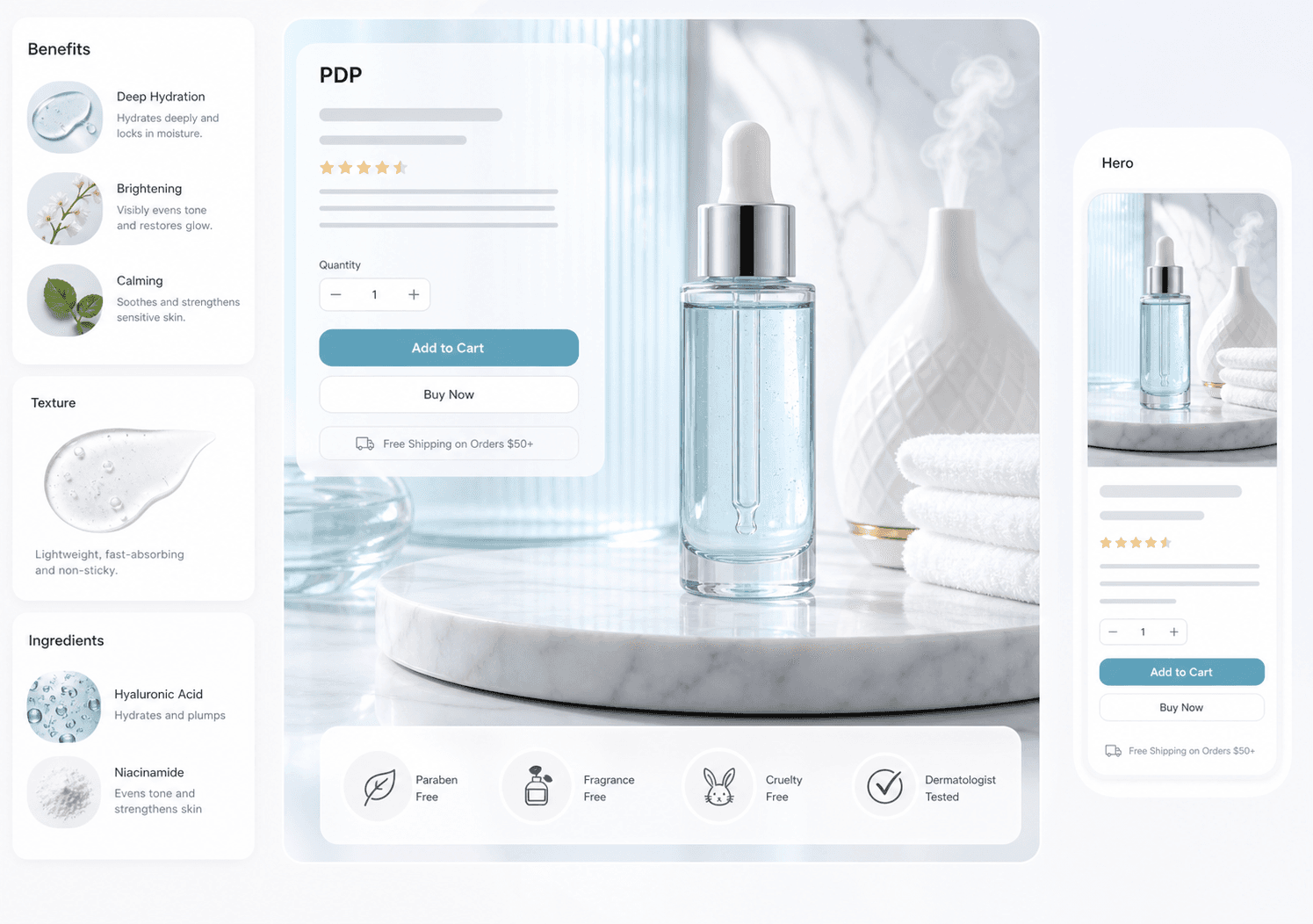
CommercePix AI by AISellerKit
Shopify PDP Product Media Example | AI Commerce
Workflow Overview
Choose the right next step
Workflow focus
Shopify PDP product media example
Best fit
E-commerce teams evaluating a product-image workflow
Start the workflow
Start generatingWhat this video direction solves
Start from an approved product image and extend one clear product story into a short, channel-ready motion concept. It is a planning example, not a claim that every output is publish-ready without review.
How to build the brief
Keep the product identity stable, specify one movement or buyer question, and choose the placement before generating. Review the final output against product facts and channel rules.
Pre-publish review
Check the product shape, packaging, claims, text, audio, framing, and destination placement before publishing commercially.
US and European storefront checklist
For a US or European Shopify storefront, let each image answer one stage of the purchase decision: recognition, benefit, proof, use case, or detail. Keep the landing-page copy, localized measurements, and campaign promise aligned.
FAQ
What is this Shopify PDP product video example?
It is a product-image-to-video planning direction for Shopify PDP merchandising and campaign use.
Can I publish it without review?
No. Review product accuracy, claims, text, audio, and the destination channel's requirements before commercial use.
Ready to apply this workflow?
Create the next product visual
Use the Shopify PDP product media example workflow with your product references, then review the result against the destination channel before publishing.
Related resources
Amazon Product Launch Video Example
Explore a product-image-to-video direction for Amazon launch creative, detail-led motion, off-Amazon ads, and social previews.
TikTok Shop Product Video Example
Explore a vertical product-motion example for TikTok Shop hooks, product proof, short ads, and creator-ready briefing.
Shopify Product Media Generator
Plan Shopify product media for PDP galleries, benefit blocks, mobile storefronts, campaign landing pages, and reviewable product storytelling.
Amazon Listing Image Set Example
Review an AI image workflow for Amazon listing main images, lifestyle scenes, feature callouts, and benefit visuals.
Resource center
A central entry point for guides, examples, templates, industry pages, and channel hubs.
AI product image resources
Browse guides, comparisons, templates, examples, and production use cases.
AI product image software resources
Cover software evaluation, creative automation, PDP optimization, and ecommerce buying intent.
Amazon and Shopify image resources
See how marketplace and storefront image systems differ.
E-commerce video
Alongside product-image workflows, CommercePix AI supports e-commerce video generation from a product start image and a short creative direction. It helps teams explore product motion for PDP heroes, short-form ads, and social previews, while keeping task history in the same account workspace. Teams must review every result for product accuracy and channel compliance before publishing.
Industry pages
Explore category-specific workflows for beauty, electronics, home, pet, and more.
Examples
Inspect public examples for detail pages, hero visuals, and marketplace sets.
Templates
Use reusable prompt and workflow templates for production tasks.