
Shopify Product Images vs Amazon Listing Images
This page compares Shopify storefront visuals and Amazon listing images so teams can brief different channels without mixing the goals of each format.
CommercePix AI by AISellerKit
Shopify Product Images vs Amazon Listing Images
Workflow Overview
Choose the right next step
Workflow focus
Shopify product images vs Amazon listing images
Best fit
Teams comparing multiple workflows or tool choices
Start the workflow
Build an image setHow Shopify images work
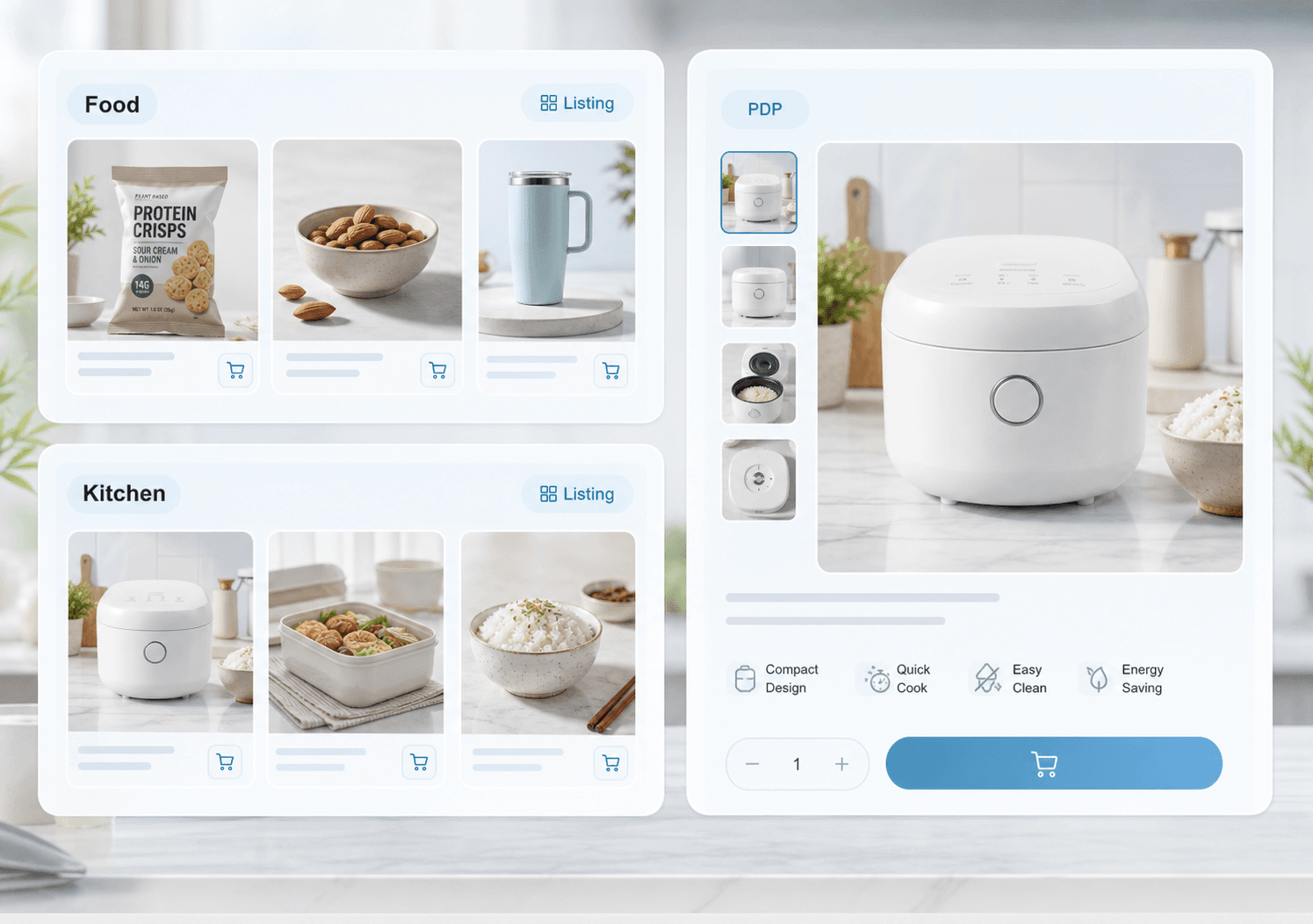
Shopify visuals usually carry more brand mood, flexible composition, and campaign storytelling because the merchant controls the storefront environment.
How Amazon images work
Amazon images usually need faster scanning, tighter product focus, and clearer structured explanation because the marketplace controls the browsing context.
US and European Amazon checklist
Choose the destination marketplace before briefing. For Amazon.com and European Amazon stores, use the exact SKU reference, keep the lead image distinct from supporting images, and validate the final asset against the current category requirements before upload.
FAQ
Can the same images work for both channels?
Sometimes, but high-performing teams usually adapt visuals because storefront and marketplace expectations are different.
Which channel needs stricter structure?
Amazon usually needs the stricter image system because the marketplace format and category norms are less flexible.
Ready to apply this workflow?
Turn this plan into a reusable image set
Use the Shopify product images vs Amazon listing images workflow with your product references, then review the result against the destination channel before publishing.
Related resources
Amazon Listing Image Generator Guide
See how an Amazon listing image generator can help sellers create main-image directions, lifestyle scenes, feature callouts, and benefit visuals faster.
Shopify Product Image Generator Guide
Understand how a Shopify product image generator supports storefront hero visuals, collection banners, PDP assets, and seasonal campaign updates.
AI Product Image Generator vs Product Photo Retouching
Compare AI product image generation and product photo retouching to decide when to create net-new visuals and when to improve existing photos.
AI Product Photography vs Traditional Studio
Compare AI product photography and traditional studio photography for speed, control, realism, cost, and ecommerce production workflows.
Resource center
A central entry point for guides, examples, templates, industry pages, and channel hubs.
AI product image resources
Browse guides, comparisons, templates, examples, and production use cases.
AI product image software resources
Cover software evaluation, creative automation, PDP optimization, and ecommerce buying intent.
Amazon and Shopify image resources
See how marketplace and storefront image systems differ.
E-commerce video
Alongside product-image workflows, CommercePix AI supports e-commerce video generation from a product start image and a short creative direction. It helps teams explore product motion for PDP heroes, short-form ads, and social previews, while keeping task history in the same account workspace. Teams must review every result for product accuracy and channel compliance before publishing.
Industry pages
Explore category-specific workflows for beauty, electronics, home, pet, and more.
Examples
Inspect public examples for detail pages, hero visuals, and marketplace sets.
Templates
Use reusable prompt and workflow templates for production tasks.